3. Haymaking Systems
a. Long, Loose Hay
- still popular in western U.S.
b. Chopped Hay
- chopped in field & blown into storage areac. Packaged Hay
(1) Bales
- rectangular (60 to 140 lbs - very common)
- large rectangular (1000 to 1500 lbs; dairies)
- Round bales (850 to 2000 lbs)
- can be dangerous
- wastage
- storage space
- feeding
(2) Stacks
- 1 to 6 tons- long, loose hay is hydraulically pressed
- not easily transported
- prone to weather loss
(3) Pelleting
4. Hay Storage
- stacks in arid areas
- square bales - barn or covered
- round bales - stack on well-drained site
- wraps?? (waste??)
- losses VS. cost of shed
D. Silage
- product of acid fermentation of green crops that have been compressed & stored anaerobically1. Needs
- proper moisture (50 to 70%)
- proper stage of maturity
- proper packing
- proper drainage
- exclude air
2. Making Silage
Phase 1-
Phase 2-
acetic acid is produced (pH: 6.0 to 4.2)Phase 3-
lactic acid foramtion begins and acetic acid formation decreasesPhase 4-
lactate production continues for 10 to 14 days, temperature gradually ¯, bacterial action ceases (pH ~ 4.0)Phase 5-
silage constant; if pH not low enough - butyric acid production! L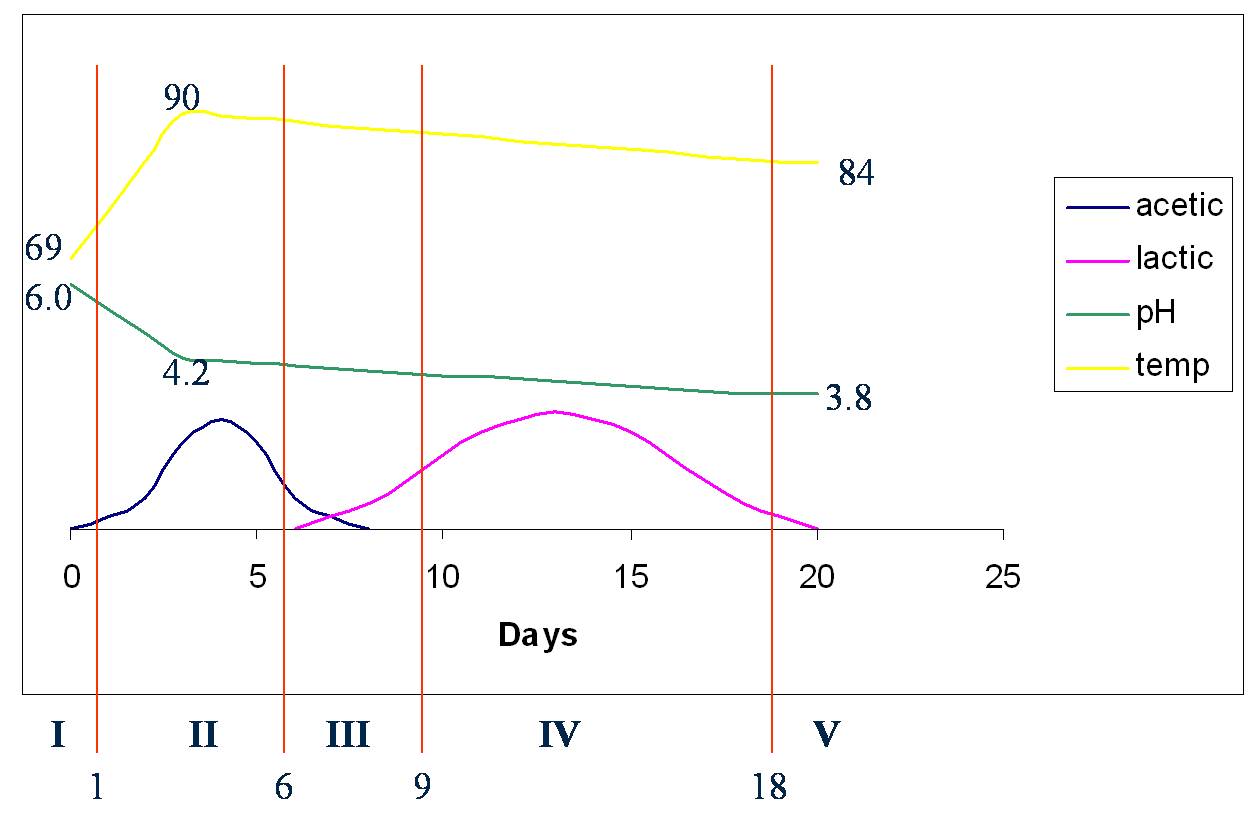
II. Processing Feedstuffs (
WHY)A. Grinding
1.
2.
Burrmill (more uniform grind, pass between two plates)B. Dry Rolling
1.
C. Pelleting
1.
D. Heat Treatment
1.
2.
Steam Flaking (long term exposure to steam), alters starch, feed becomes more digestible (cereal smell - quite pleasant)3.
Preasure Flaking (more expensive)4.
Roasting (puffed & slightly carmalized product)5.
Extruding (heat & presure à forced through a hole makes a ribbon à breaks into flakes6.
Popping (700-800oF for 15 to 30 seconds)7.
Micronizing (exposed to microwaves, expands - but doesn’t pop)E. High Moisture Harvesting
(25 to 30% moisture)1.
2.
Feed efficiency is improvedF. Reconstituted High Moisture Grain
1.
2.
May improve feed efficiency but not as much as high moisture harvesting (leaching??)G. Acid Preserved High Moisture Grain
1.
Balancing Rations
A) Formulate a swine diet containing 20% CP using corn and soybean meal. As-fed basis.
1) From packet: Corn = 8.8% CP
SBM = 45.7% CP
2) X = % corn
100 - X = % SBM
3) .088(X) + .457(100 - X) = 20
.088(X) + 45.7 - .457(X) = 20
-.369(X) = 20 - 45.7
X = 69.65
4) Final Diet
69.65% Corn
30.35% SBM
B) Prepare 1 ton of a swine diet containing 16% CP from corn and a mixture of SBM and meat tankage (3 parts SBM to 1 part tankage). As-fed basis.
1) From Packet: Corn = 8.8% CP
SBM = 45.7% CP
Tankage = 47.2% CP
2) Determine CP content of SBM/tankage mix.
3(45.7) + 1(47.2) = 46.075% CP in mix
4
3) X = lbs Corn
2000 - X = lbs Mix
4) .088(X) + .46075(2000 - X) = 320
X = 1613.68
5) Final Diet
1613.68 lbs Corn
289.74 lbs SBM
96.58 lbs meat meal tankage