CARBOHYDRATES
General:
Carbon containing compounds that also contain H & O in the same ratio as water (H2O) CH2O, C6H12O6Major energy source of the body CHO > fat > protein
Monomer:
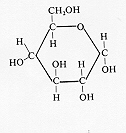
basic building block. For CHO = monosaccharides; (protein = a.a.)Glucose-
major energy source for most cells. No free glucose is ingested. Enzymes must degrade CHO's to single glucose (mono) units.I. Monosaccharides:
single unitA. Hexoses:
6 carbona. Glucose
b. Fructose

c. Galactose
-not free in nature = usually linked to something else
d. Mannose

B. Pentoses
a. Arabinose

b. Xylose

c. Ribose
(found in DNA & RNA)
II. Disaccharides
A. Sucrose

B. Lactose
(galactose + glucose)
C. Maltose
(glucose + glucose; a 1,4)
D. Cellobiose
(glucose + glucose; b 1,4)
III. Polysaccharides
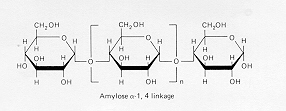 A. Amylose

B. Amylopectin
(a 1,4 links with a 1,6 branches)C. Glycogen
(same as amylopectin, but much more branching - 2-3 X)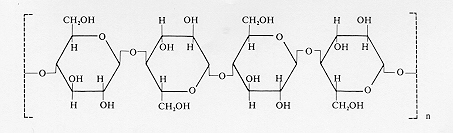 D. Cellulose
Monogastrics
Source of CHO: plant starch & animal glycogen
Breaks down to glucose
Digestion & Absorption?
Small IntestineGlucose goes to the liver via hepatic portal vein
In the liver
Ruminant
Source of CHO:
Primarily starch and celluloseAnaerobic fermentation in rumen!
Starch & cellulose
Type of Diet:
High cellulose = increase rumen acetate = milkfat
High starch = increase rumen proionate = gluconeogenic
Anaerobic Rumen:
No O2
No electron acceptor
No electron transport
Goal is to regenerate NAD (drives glycolysis and krebs), but in Rumen??
NAD's transfer to pyruvate to form lactate
2 ATP's produced in rumen glycolysis, instead of 6 in cells
CO2 serves as terminal electron acceptor CO2
Glucose
® lactate ® propionate
® butyrate
® acetate
Lactate build-up in the rumen:
Lactic acidosis
Acidosis
Grain overload
Laminitis
founder
Cause=
abrupt increase in starch intake, increases lactate procuction, decreases rumen pH (6.8 ® 5.0).Occurs when taken from pasture (roughage) and immediately placed on high CHO (corn) diet.